
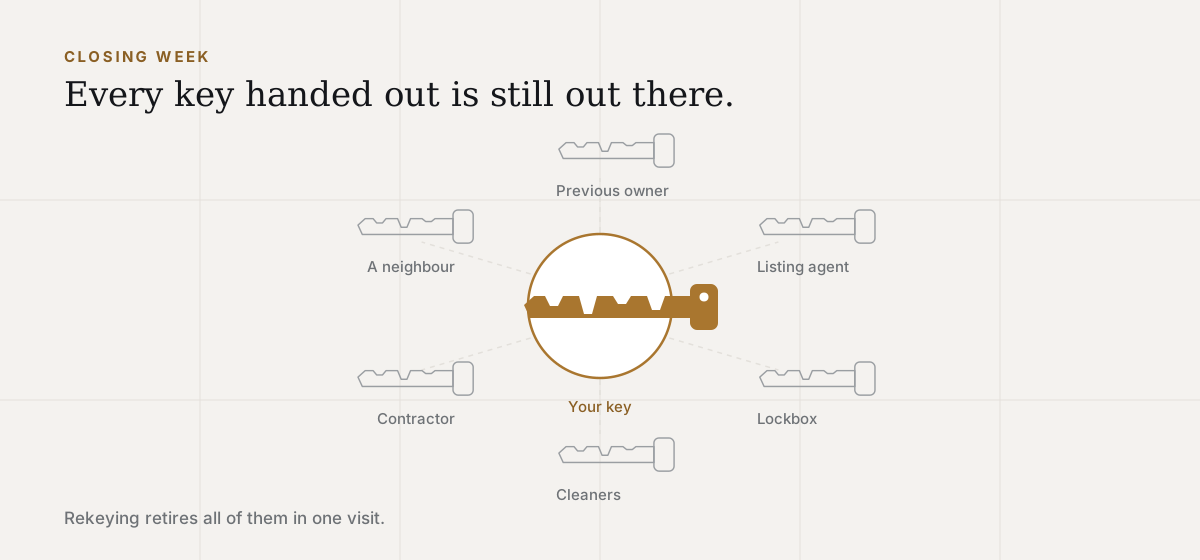
Closing day is a blur of paperwork, and security is almost never on the list. It should be near the top, because at the moment you take possession you are the only person in the chain who does not know how many keys exist.
1. Assume the keys are out there
A house that has been lived in for a decade and then listed has handed out keys to: the previous owners and their adult children, the listing agent, a lockbox, showing agents, photographers, stagers, inspectors, cleaners, landscapers, a contractor or two, and at least one neighbour. Nobody is acting in bad faith. It is simply that no one ever collected them.
Rekeying every exterior cylinder costs less than a single month of most alarm monitoring contracts and takes one visit.
2. Count cylinders, not doors
People call and say “three doors.” Then we arrive and find a knob and a deadbolt on each — six cylinders — plus a garage side door and a gate padlock. Walk the exterior and count every lock that takes a key, including the one on the shop out back. It makes the quote accurate the first time.
3. Get everything onto one key
This is the part people do not realise they can ask for. If your front knob, back deadbolt and garage entry are all the same brand family, they can usually be keyed alike — one key for the whole house — without buying new hardware. Fewer keys is not just convenience; a keyring with one house key on it is one you notice missing.
4. Check the doors, not just the locks
While we are there, we look at things that are about to annoy you:
- Doors that need a shoulder to latch. Usually a strike alignment issue, adjusted in minutes. Left alone, people stop deadbolting the door because it is a fight.
- Sagging hinges. Common on heavy exterior doors in older Tulsa housing stock. Fixed with the right screws into the frame, not by replacing the door.
- Short deadbolt strike screws. The single cheapest security upgrade in existence: three-inch screws that reach the framing instead of the trim.
- A deadbolt that does not fully throw. A bolt that only extends halfway is decoration.
New-build buyers: your house has been through framers, plumbers, electricians, drywall, paint, flooring, trim, HVAC and final clean — often on a construction key that every trade had. Builders will tell you the locks were changed at handover. Sometimes they were. Rekey anyway.
5. Decide about keypads before you buy one
Keypads are genuinely good for houses with kids, cleaners, dog walkers or short-term guests, and we install them regularly. Two pieces of advice. First, buy one that still takes a mechanical key, and have that key match the rest of the house. Second, put it on the door you actually use, which for most families is the garage entry, not the formal front door.
6. Handle the mail and the garage codes too
Not locksmith work, but it is the same afternoon: change the garage door opener code (the factory code is often untouched), collect any spare remotes the seller left in a drawer, and if there is a keyed mailbox, that cylinder can be changed as well.
7. Then write down who has a key
Start the record on day one. Two spares, who holds them, and the date. It sounds excessive for a house, but the next time you need to rekey, you will know exactly why and exactly what to hand back.
Timing it
The ideal window is between closing and the moving truck — the house is empty, we are in and out, and you move into a home only you have keys to. If that window has passed, the second-best day is any day this week.